Testingggggg with cupcakes
Blog summary testing for strange characters being added at the end of the summary.

You have likely seen Poppi soda on grocery store shelves with bright cans and fun flavors.
Poppi markets itself as “the future of soda,” promoting its drinks as containing “gut healthy” prebiotic fiber, including apple cider vinegar. Claims such as “for a healthy gut” and similar language were consistently featured across Poppi’s marketing and advertising.
These messages are also what led to a class action lawsuit.
A few people said they were misled. They actually believed drinking Poppi would improve their gut health. People relied on Poppi's statements when deciding to buy it.
According to consumers, they either would not have purchased the soda, or would have paid less for the soda, had they known the drinks would not provide gut health benefits.
That's where the issues began. Multiple people raised similar concerns of wrongdoing, which triggered a class action investigation of Poppi's business practices.
Sometimes one complaint isn't just one complaint.
A class action investigation looks at the bigger picture, asking questions such as:
What exactly did the company say?
How were the ingredients described?
Were consumers getting a clear and accurate understanding of the product?
Without taking a deeper look, complaints would have faded away. In the Poppi case, reviewing the ads, packaging, and ingredient messaging led to a class action lawsuit.
What happens between "I feel misled", and "Here's your refund"?
It usually looks something like this:
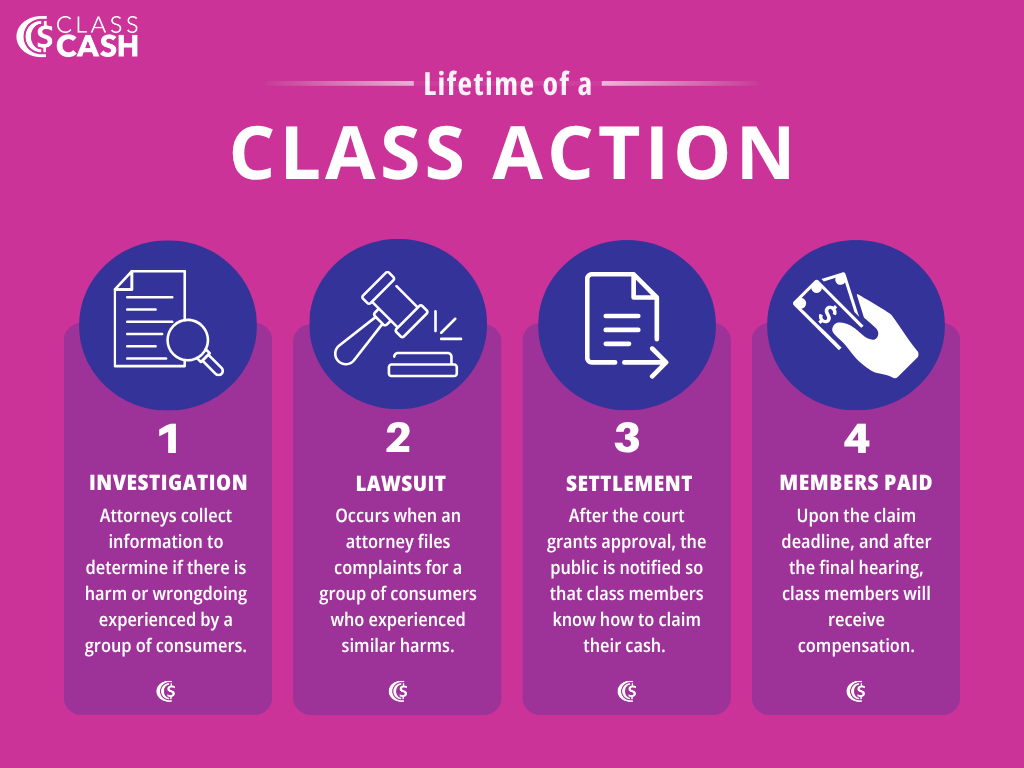
Class actions don't happen overnight and they do not happen without someone digging into the details first.
Most people only hear about the last step, when it is time to submit a claim and get paid. Yet, the investigation and lawsuit stages are what makes reaching a settlement and receiving payment possible in the first place.
Trials are long, expensive, and unpredictable.
Class action settlements are a practical way to resolve disputes without dragging things out for years.
Also, settlements don't automatically mean a company admitted any wrongdoing. Reaching a settlement simply means both sides agreed to resolve complaints with compensation and/or a change in business practice.
Once a settlement is approved by the court, people who identify as a class member are given the opportunity to submit claims before the claims deadline for compensation.
Settlements like this can:
Put money back in the pockets of the consumer
Encourage clearer and more accurate marketing practices
Hold companies accountable for how products are marketed
Without a settlement, affected consumers may receive no relief at all.
You have likely purchased a product based on claims that later turned out to be misleading. It happens, and we typically move on.
Class actions allow those concerns to be addressed collectively instead of one person trying to fight a large company alone. When lots of people are affected in a similar way, it opens the door to compensation while holding companies' accountable.
There's one catch though: none of that means anything if you don't keep track of what is going on.
Many people miss out on class action settlements simply because they are unaware an investigation or settlement exists, don't understand what a notice is, or miss important deadlines.
This is why ClassCash exists! To help you see which settlements are open, whether you might qualify, and what steps are needed to- Claim it Now!