
The VICP: Another Way to Resolve Vaccine Injury Petitions
Individuals who suffered from vaccine-related injuries may use the VICP for potential financial compensation.
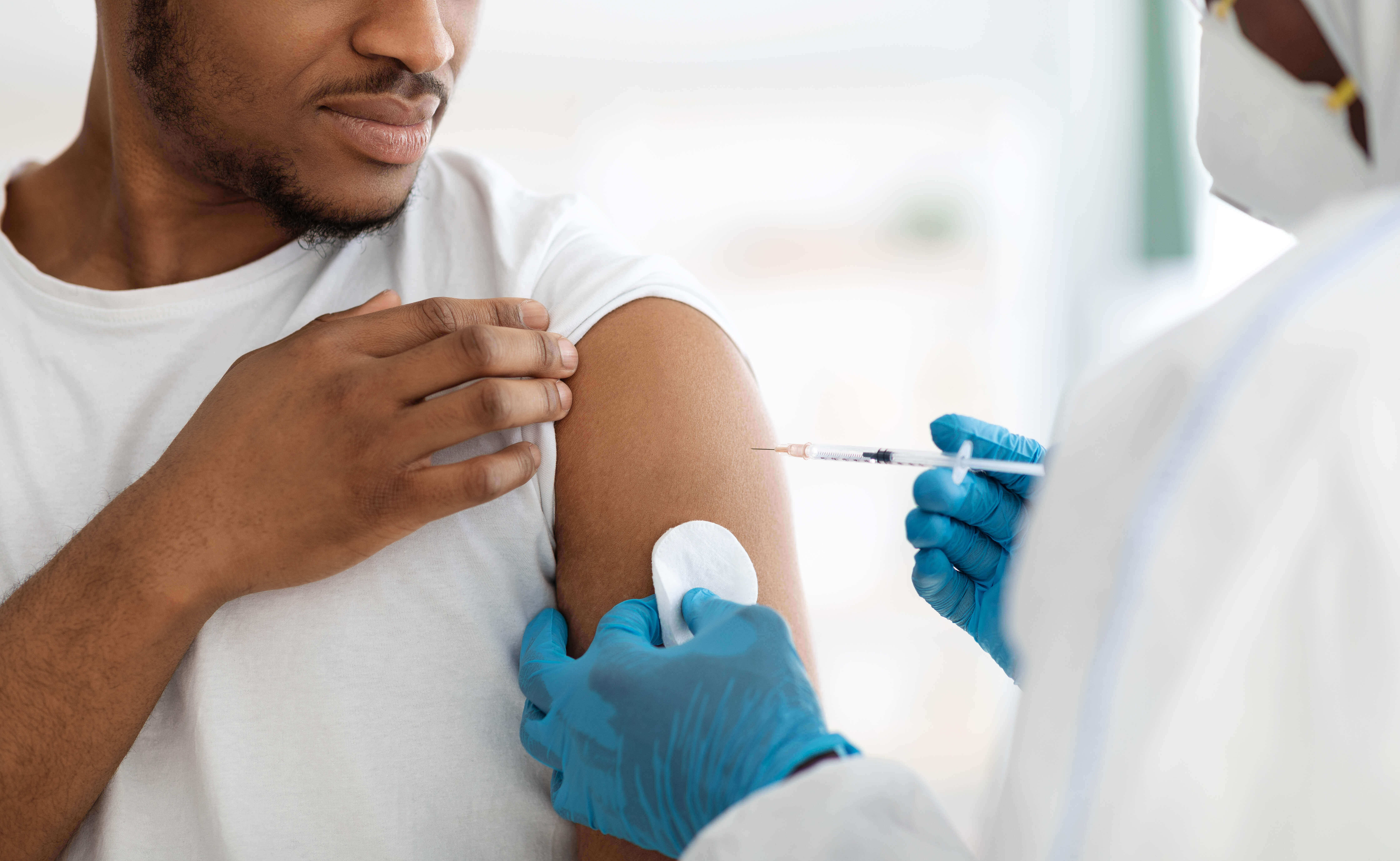
Vaccines, like any medication, can sometimes cause side effects. Most side effects are mild and go away on their own, while serious reactions, such as severe allergic reactions, are rare. For several commonly given vaccines, HRSA (Health Resources and Services Administration) reports that severe allergic reactions occur in about 1 or fewer out of every 1 million doses. For perspective, if that same rate were applied across 5.6 billion doses, it would equal roughly 5,600 reactions.
What Happens to the Vaccine Injured Population?
In some cases, however, a person may believe they were seriously injured by a vaccine. The National Vaccine Injury Compensation Program (VICP) provides a way for people who meet program requirements to seek financial compensation if they can show that a covered vaccine caused a qualifying injury. The HRSA reports that 1 individual was compensated for ever 1 million doses distributed.
The National Vaccine Injury Compensation Program was created under the National Childhood Vaccine Injury Act of 1986. The program was designed to give people with certain vaccine injuries another way to seek compensation while also helping protect the U.S. vaccine supply.
During the late 1970s and early 1980s, lawsuits involving the DTP (diphtheria, tetanus, pertussis) vaccine grew quickly. From 1978 through 1984, 140 lawsuits were filed against the three DTP manufacturers, with more than half filed in 1984. Large claims, jury awards, settlements, and trouble getting liability insurance put growing pressure on vaccine manufacturers.
By 1984, two of the three commercial DTP manufacturers had left the market. The remaining vaccine manufacturer, Lederle, was also dealing with production and insurance problems. These issues raised concerns about vaccine shortages and helped push lawmakers toward a federal compensation system.
The VICP is funded through the Vaccine Injury Compensation Trust Fund. A $0.75 excise tax is charged for each disease prevented by a covered vaccine dose, and the U.S. Treasury collects the tax and manages the fund.
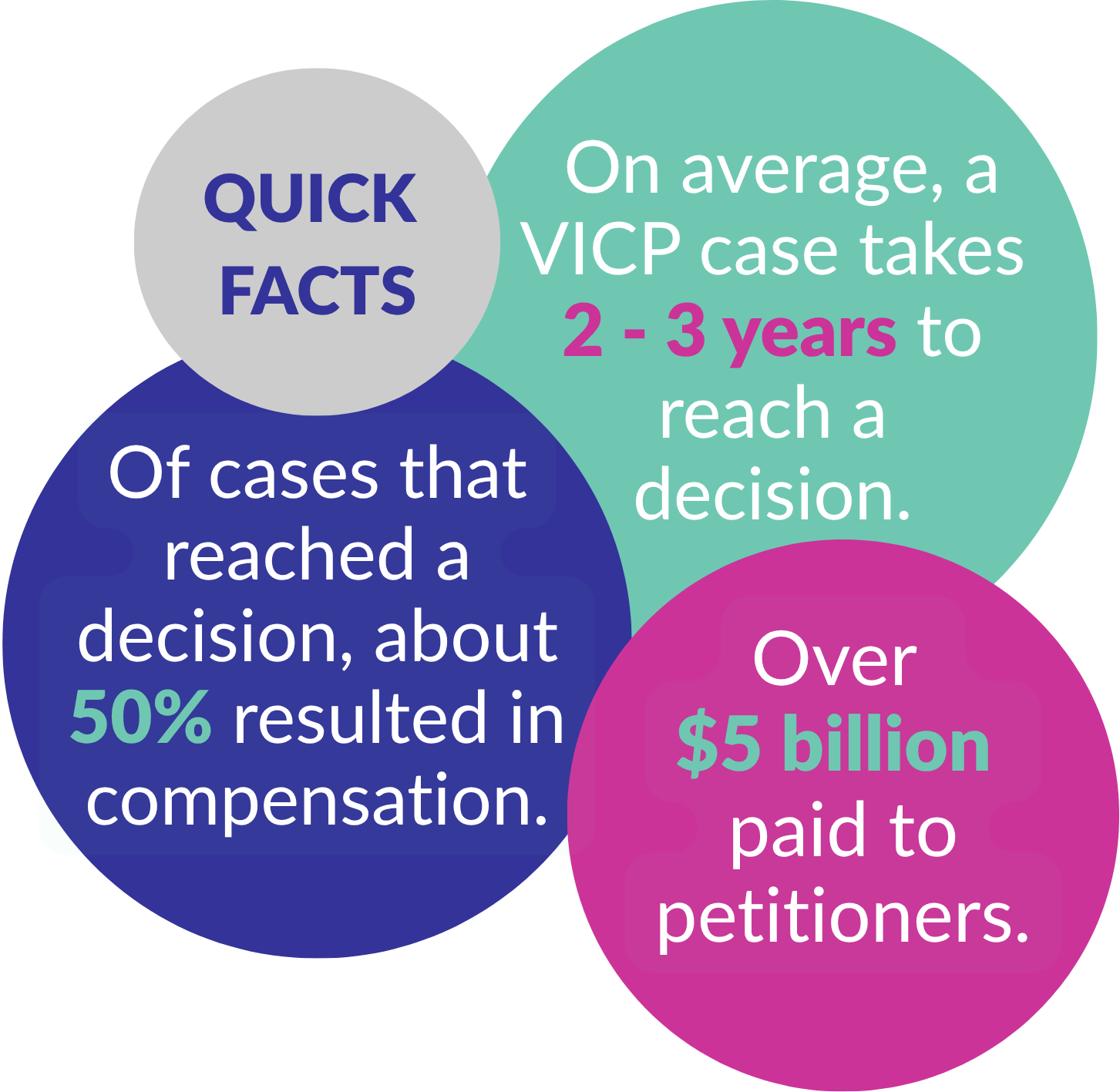
So, what has happened since the program began?
Since the VICP began accepting petitions in October 1988.
Out of 26,751 cases that reached a decision.
Based on more than $5.6 billion paid across 13,368 petitioner awards. Of that, $5.02 billion was paid directly to petitioners.
That is how long HRSA says it generally takes for a petition to be adjudicated after filing.
Know the deadline: In general, an injury petition must be filed within 3 years after the first symptom. For a vaccine-related death, a petition generally must be filed within 2 years of the death and 4 years after the first symptom of the injury that led to the death.
Diphtheria (e.g., DTP, DTaP, Tdap, DT, Td, TT)
Haemophilus influenza type b polysaccharide conjugate vaccines (e.g., Hib)
Hepatitis A (e.g., HAV)
Hepatitis B (e.g., HBV)
Human papillomavirus (e.g., HPV)
Seasonal influenza* (e.g., Flu)
Measles (e.g., MMR)
Mumps (e.g., MMR, MR, M)
Meningococcal** (e.g., MCV4, MPSV4, MenB-FHbp, MenB-4C)
Pertussis (e.g., DTP, DTaP, Tdap)
Pneumococcal conjugate*** (e.g., PCV)
Polio (e.g., OPV or IPV)
Rotavirus (e.g., RV)
Rubella (e.g., MMR, MR, R)
Tetanus (e.g., Td)
Varicella (e.g., VAR)
The VICP is a no-fault alternative to the traditional legal system. This means petitioners do not have to prove that a vaccine manufacturer or health care provider was negligent.
The process is also designed to be less formal than a traditional lawsuit. Discovery is limited, and some cases may be decided without a traditional courtroom hearing.
Most petitioners use a lawyer. If certain requirements are met, the VICP may pay reasonable attorneys’ fees and legal costs, even if the petitioner does not receive compensation.
People of any age who received a VICP-covered vaccine and believe they were injured as a result can file a petition. A parent, legal guardian, or legal representative can also file a petition on behalf of a child, an individual with a disability, or someone who has died.
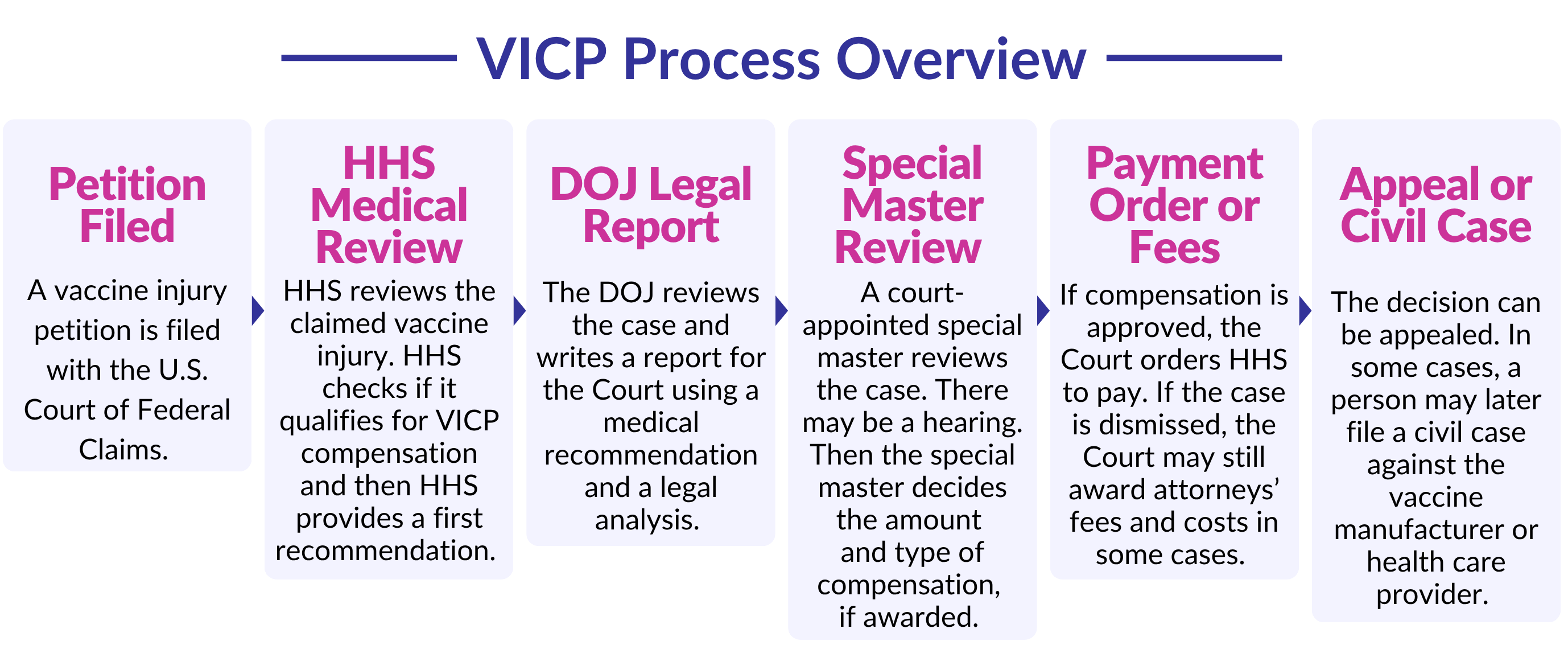
After a petition is filed with the U.S. Court of Federal Claims, it moves through several reviews.
First, HHS medical staff review the claimed vaccine injury and give a recommendation. Next, the Department of Justice reviews the case and sends a report to the Court.
A court-appointed special master then reviews the evidence and decides whether compensation should be awarded. There may also be a hearing. If compensation is approved, the Court directs HHS to make the payment.
The decision can also be appealed. In certain situations, a petitioner may later be able to file a civil case.
No. COVID-19 vaccine injuries are handled differently. If you or a loved one believes you suffered a serious injury from a COVID-19 vaccine, you may be able to file a claim through the Countermeasures Injury Compensation Program (CICP) rather than the VICP.
The CICP provides compensation for certain covered serious injuries or deaths resulting from the administration or use of eligible countermeasures. These can include vaccines, medications, medical devices, or other products used to prevent, diagnose, or treat a public health emergency or address a security threat. CICP claims generally must be filed within one year of receiving or using the countermeasure.
If you believe you suffered a serious injury after receiving a covered vaccine, you can seek legal help or learn more about filing a VICP petition with the U.S. Court of Federal Claims.
Note:
*Non-Seasonal Flu Vaccines are not VICP-covered vaccines.
**All other formulations of meningococcal vaccines, such as vaccines produced by recombinant DNA technology, are covered under the VICP in otherwise eligible individuals.
***Pneumococcal polysaccharide vaccine (PPSV, PPV) is not a VICP-covered vaccine.